Fragrance Accords
Floral épicé chypré


WAKA - MADAGASCAR Eau de Parfum


Pickup available at 8 rue de Paris
Usually ready in 4 hours
WAKA is an energy-fragrance, a carnal sillage that captures the soul of Madagascar.
It is a vibrant synergy where the radiance of Blue Ginger and the curative power of Ravintsara blend with spices and tropical flora.
More than a perfume, it is an olfactotherapeutic journey, a stimulating benefit for body and mind.
Dare the sillage of a curative filter.
Famille olfactive : Chypre / Floral & Spicy
L'évolution du parfum
Waka opens with a fresh and powerful breath, like the air of the Malagasy forest. The camphoraceous and almost medicinal freshness of Ravintsara is electrified by the spicy vivacity of Blue Ginger. The heart then unfolds, more floral and green, where the minty rose of Geranium and Palmarosa is jostled by the green and fruity note of Tagetes. The trail finally settles, deep and comforting. Patchouli, woody and earthy, is enveloped in a cocoon of Vanilla and Benzoin, leaving a warm and spicy imprint on the skin.
The medicinal tree of Madagascar. Ravintsara, meaning 'good leaf' in Malagasy, offers an essential oil with a fresh, intense, and camphoraceous fragrance, similar to eucalyptus but with greater sweetness. It is a purifying and energizing breath.
Origine & récolte
The journey takes us to the Malagasy forests. Harvesting Ravintsara leaves is a local expertise. The leaves are then distilled to extract a highly pure essential oil, a concentrate of the power of Malagasy nature.
History & Origins
Ravintsara (Cinnamomum camphora) is actually a camphor tree originating from Asia, introduced to Madagascar. But on the island's red soil, its chemical composition changed, making it devoid of toxic camphor and rich in cineole, which gives it its unique properties. It has become a mainstay of Malagasy pharmacopoeia.
Yesterday's and Today's Uses
From a traditional Malagasy remedy, Ravintsara has become an essential oil indispensable in worldwide aromatherapy. Its use in perfumery remains confidential, reserved for bold and natural creations.
The Benefits of the Matter
In aromatherapy, Ravintsara is a star. It's an exceptional antiviral and immune stimulant, widely used to prevent and treat winter infections. It is also an excellent nerve and physical tonic.
Impact
Supporting the Ravintsara sector means promoting a flagship resource of Madagascar and providing sustainable income for rural communities.
The leaf that heals, the breath that frees, A forest fragrance, a primal force. Camphoraceous, invigorating, a clear light, The soul of Madagascar, that chases away misery.
Ravintsara is a challenge in fine perfumery because of its power. I used it to create a striking and bold opening, immediately evoking a journey. Its cineole freshness is the perfect counterpoint to the warmth of the base notes, creating a tension that lasts throughout the fragrance's development.
Ravintsara is the starting point of Waka. It's the scent of Madagascar, a unique aromatic freshness that evokes the richness of its endemic flora. It's a note that speaks of nature, care and vital energy.
The information is given for guidance only. A perfume is a cosmetic product. Ravintsara essential oil is potent and not recommended for pregnant women and young children.
Fresher, more vibrant and floral than classic ginger, Blue Ginger (or Galangal) brings a unique spicy facet, almost peppery and soapy, which energizes the top notes of the fragrance with surprising elegance.
Origine & récolte
This is the story of an encounter between an exceptional terroir and expertise. On the high plateaus of Madagascar, farmers cultivate this rhizome whose bluish color when cut testifies to its freshness and richness in active compounds. Distilling it on site allows its full energy to be captured.
History & Origins
Galanga (Alpinia galanga), or Blue Ginger, is a rhizome from the same family as ginger and turmeric. Originally from Indonesia, it is a fundamental ingredient in Southeast Asian cuisine (Thailand, Malaysia...). Its cultivation in Madagascar is more recent and offers an exceptional olfactory quality.
Yesterday's and Today's Uses
A mainstay of Asian gastronomy and pharmacopeia, its use in fine perfumery is a more contemporary trend, sought after for its spicy freshness and complexity.
The Benefits of the Matter
In traditional Asian medicine, Galanga is used for its anti-inflammatory, digestive, and tonic properties. It is known to stimulate circulation and relieve muscle pain.
Impact
By supporting a high value-added culture, this sector offers an economic alternative to slash-and-burn agriculture, thus contributing to the fight against deforestation in Madagascar.
On the red earth of the island continent, A secret rhizome, a powerful treasure. Its scent is a flash, sharp and bewildering, A fiery spice under a breath of wind.
Blue Ginger is a fantastic raw material. It has the freshness of ginger, but without its earthy side, and with a floral facet reminiscent of freesia. It allows for the creation of a very bright spicy top note, which links the citrus notes and the warm spices of the heart.
We didn't want a classic ginger. The Madagascar Blue Ginger, sourced by Behave, seduced us with its incisive freshness and complexity. It's the spice that brings the 'waka waka', that African rhythm which makes the fragrance so original.
Information is given for guidance only. A perfume is a cosmetic product. Cannot replace medical advice.
A rose-scented flower, but with a greener, more vibrant personality. Geranium offers a floral, minty and slightly lemony scent. It's a note that brings floral freshness and natural elegance.
Origine & récolte
The journey takes us to the Nile Delta. The geranium plants are harvested just before flowering, as this is when the leaves are richest in essential oil. They are then distilled to extract an essence with a powerful and complex fragrance.
History & Origins
Pelargonium graveolens, or Rosat Geranium, is native to South Africa. It was introduced to Europe in the 17th century. Although it is called 'geranium', it should not be confused with the geraniums on our balconies, which are odourless. Production for perfumery is now concentrated in Egypt and China.
Uses of Yesterday and Today
Used for its medicinal properties and to repel mosquitoes, geranium has become a key ingredient in perfumery to recreate a fresh and green rose note, at a lower cost than rose absolute. It is a pillar of fougère and floral accords.
The Benefits of the Matter
In aromatherapy, geranium essential oil is used for its hemostatic, anti-inflammatory, and antibacterial properties. It is also known for its benefits on the skin, particularly for regulating sebum and soothing irritations.
Impact
Supporting these sectors encourages sustainable agriculture and provides stable incomes for Egyptian farming communities.
On the banks of the Nile, a velvety leaf, Offers a rose fragrance, a mentholated freshness. A flower that is not a flower, a bewildered beauty, The promise of harmony, of an enchanted soul.
I chose an Egyptian Geranium for its exceptional quality, a very balanced blend of its rosy, minty and green facets. It has an almost "ice cube" freshness which is very interesting. I used it to create a floral heart that is not opulent, but on the contrary, vibrant and sparkling.
Geranium is the floral and green heart of Waka. It brings that rosy and minty facet which links the aromatic freshness of the top notes to the woody depth of the base. It's a balancing note, bringing harmony to the composition.
The information is provided for informational purposes only. A fragrance is a cosmetic product. Cannot replace medical advice.
A rose-scented herb. Palmarosa is a herbaceous plant whose aerial parts are distilled to obtain an essential oil with a floral, rosy fragrance, with green, lemony and slightly dry facets. It's a note that brings a floral freshness and luminous naturalness.
Origine & récolte
The journey takes us to Nepal. Palmarosa is a herb harvested before flowering. It is then distilled to extract an essential oil with a fresh and delicate fragrance, reminiscent of rose and lemon.
History & Origins
Palmarosa (Cymbopogon martinii) is a tall grass native to India and Pakistan. Its name comes from its rose-like fragrance. It is in the same family as citronella and lemongrass.
Yesterday and Today's Uses
Used in Ayurvedic medicine to treat skin problems and fever, Palmarosa essential oil is now highly prized in natural cosmetics and perfumery for its rosy scent and versatility.
The Benefits of the Matter
In aromatherapy, Palmarosa essential oil is an excellent antibacterial and antifungal agent. It is also highly valued in cosmetics for its moisturizing, astringent, and healing properties.
Impact
Supporting organic Palmarosa agriculture means encouraging a farming model that is more respectful of the environment and farmers' health.
In the foothills of the Himalayas, a wild herb, Offers a rose scent, a wise message. A lemony freshness, a gentle drink, For the soul that calms and finds its shore.
I love Palmarosa for its very natural floral freshness. It has a 'clean' and slightly watery aspect that is very interesting. I used it to bring a more airy dimension to the floral bouquet, so that it wouldn't be too dense and would retain its vibrancy.
Palmarosa is Waka's rosy light touch. It complements geranium with a softer, more lemony facet. It's a note that brings joy and lightness to the floral heart of the fragrance.
Information is given for guidance only. A fragrance is a cosmetic product. Cannot replace medical advice.
A flower with a surprising and audacious fragrance. Marigold offers a green, fruity (apple, blackcurrant) and aromatic scent, with an almost metallic facet. It's a characterful note, bringing a striking originality and modernity.
Origine & récolte
The journey takes us to South Africa. Marigold flowers are harvested and then distilled to extract an essential oil with a powerful and surprising fragrance.
History & Origins
Native to South America, the marigold was introduced to Europe in the 16th century. It is often called "Indian marigold" although it is not native to India. It is used in many cultures for religious ceremonies.
Yesterday's and Today's Uses
Used as an ornamental plant and in rituals, marigold is a more confidential raw material in perfumery, reserved for audacious creations because of its unique olfactory signature.
The Benefits of the Matter
In traditional medicine, marigold is used for its anti-inflammatory and antiseptic properties, and to treat skin conditions.
Impact
Supporting marigold cultivation means promoting unique floral biodiversity and supporting the local agricultural economy.
In the South African veld, a sun flower, Offers a wild fragrance, a strange marvel. Green, fruity, a scent without equal, That shakes the senses and awakens the spirit.
Marigold is a very powerful and distinctive raw material. It must be used with extreme parsimony. I incorporated it for its green apple note which brings a fruity freshness and an almost aggressive greenness, creating an interesting contrast with the sweetness of the base notes.
Marigold is Waka's audacious note. It brings this unexpected green and fruity facet that breaks the codes of the classic floral chypre. It's a note that evokes the wild and unpredictable flora of Africa.
Information is given for guidance only. A fragrance is a cosmetic product. Cannot replace medical advice.
Far from the reductive cliché of the 60s, patchouli is a note of abyssal depth. Its fragrance is that of damp earth after rain, a dark and sensual wood which, thanks to the perfumer's expertise, can metamorphose into an elegant, clean signature with hints of dark cocoa. It is one of the most charismatic and structuring materials in the palette.
Origine & récolte
The journey for patchouli takes us to the rural villages of Sulawesi. There, patchouli is not an industrial crop, but a family affair. Behave Sourcing immerses itself in this reality to build trusting partnerships, where ancestral know-how meets sustainable practices to create an exceptional raw material.
History & Origins
Native to Southeast Asia, patchouli travelled West along the Silk Road, where it was used to protect precious cashmere shawls from moths. Its scent thus became, in Europe, synonymous with luxury and exoticism, before being adopted by the hippie movement.
Uses Then and Now
From insect repellent, patchouli has become indispensable to modern perfumery. It is an exceptional fixative and the cornerstone of chypre, oriental and woody families. Technological advances now allow for purified fractions offering an infinite palette of nuances.
The Benefits of the Matter
In aromatherapy, patchouli is known for its balancing and soothing effect. It is used to relieve stress and anxiety. On the skin, it has anti-inflammatory, healing, and antiseptic properties.
Impact
The story of patchouli is one of community empowerment. By supporting a supply chain that offers fair prices and ongoing training, we help create stable incomes that reduce pressure on forests.
In the humid shadow where the jungle breathes, The leaf waits, a secret a long time desires. Fermented, distilled, its dark soul stretches, The earth becomes perfume, a powerful empire.
Patchouli is an architect. I don't use it for its smell alone, but for the structure and depth it brings to a composition. It's a dark, velvety backdrop that brings out the light of a rose or the warmth of amber. Modern fractions like “Cœur de Patchouli” are a revolution: they give me the power of its tenacity and richness without the dusty facets.
Patchouli is the chypre foundation of Waka. It brings that earthy, dark structure which anchors the fragrance and gives it its timeless character. We chose a 'Patchouli Heart' for its purity, which marries the richness of the Malagasy spices.
The information provided is for guidance only. A fragrance is a cosmetic product and cannot replace medical advice.
The black gold of perfumery. Far from a sugary image, vanilla absolute is a raw material of incredible richness and complexity. It unfolds warm, balsamic, leathery, smoky and spicy notes, with a gourmand facet that is never sickening.
Origine & récolte
The journey takes us to northeastern Madagascar. Vanilla cultivation is a work of infinite patience: each flower is pollinated by hand, then it takes 9 months for the pod to ripen. Then come the complex stages of scalding, sweating and drying, which last for months and develop the vanilla aroma. It's an ancestral and precious know-how.
History & Origins
Vanilla is the fruit of an orchid native to Mexico, where it was used by the Aztecs to flavor their cacao drink. Its cultivation was exported to Madagascar in the 19th century, where a young slave, Edmond Albius, discovered the process of manual pollination, which is still used today.
Uses of Yesterday and Today
The world's most popular spice, vanilla is a mainstay in perfumery, particularly in the oriental family. It brings roundness, warmth and tenacity to compositions.
The Benefits of the Matter
In aromatherapy, vanilla is used for its relaxing and antidepressant properties. Its scent is known to calm stress, combat insomnia, and bring a feeling of comfort.
Impact
Supporting a sustainable vanilla sector means fighting deforestation (because vanilla grows in agroforestry) and preserving the unique biodiversity of Madagascar.
In the SAVA forest, the orchid awaits its night, An expert hand unites it, gives life. The dry black pod, a treasure that ripens, Its fragrance is a balm, that delights the soul.
Vanilla absolute is one of my favorite ingredients. It has a warmth and depth that nothing can replace. I use it to create amber and gourmand bases, but always with elegance. Combined with sandalwood, it creates an incredibly sensual and comforting "skin" effect.
Vanilla is the treasure of Madagascar that we wanted to celebrate in Waka. We chose an absolute for its depth and smoky, leathery notes, far from the sweet vanilla. It's a terroir vanilla, which tells the story of the richness of the red island.
The information provided is for guidance only. A perfume is a cosmetic product. Cannot replace medical advice.
Benzoin tears are a balsamic resin of incomparable warmth and sweetness. Its fragrance is rich, vanilla-like, with facets of caramel, almond, and a spicy touch of cinnamon. It's a balm for the soul, an enveloping and extremely comforting base note.
Origine & récolte
The journey takes us to the forests of northern Laos. The harvesting of benzoin is an ancestral skill. Harvesters incise the bark of the Styrax tree and wait several months for the resin to flow and harden before collecting it. It's a story of patience and harmony with nature.
History & Origins
Benzoin is a resin from the Styrax tree, native to Southeast Asia. Its name is said to derive from the Arabic 'luban jawi', meaning 'incense of Java'. Used for centuries as incense in temples and mosques, it was introduced to Europe in the 14th century.
Uses of Yesterday and Today
Used as purifying incense and in traditional medicine, benzoin is a key ingredient in oriental and amber perfumes. It is the main note of the famous 'Papier d'Arménie'. It brings exceptional warmth and tenacity.
The Benefits of the Matter
In pharmacopeia, benzoin is used for its antiseptic, healing and expectorant properties. It is an ingredient in the famous 'Baume du Commandeur'. In aromatherapy, it is used for its relaxing virtues.
Impact
The harvest of benzoin is a sustainable economic activity that encourages local populations to preserve their forest environment.
The tree's wound is a sacred door, From which flows a tear, sweet and amber. Its fragrance is a balm, a golden warmth, A comfort for the soul, a peace regained.
Siam Benzoin is one of the most beautiful balsamic notes. It has a natural gourmand facet, without being sweet. I used it to bring extreme warmth and roundness to the base of the perfume, creating an amber and powdery trail with great tenacity and comfort.
Siam Benzoin is Waka's ultimate 'cuddle' note. It brings that vanilla and balsamic warmth that envelops the patchouli and vanilla, creating a base of addictive sweetness and sensuality. It's the note that makes you want to snuggle into the fragrance.
The information is given for guidance only. A perfume is a cosmetic product. Benzoin may contain allergens (benzyl benzoate).
100% d'origine naturelle.
Liste des ingrédients (INCI) : Alcohol Denat**, Aqua(Water), Parfum(Fragrance), Limonene*, Linalool*, Geraniol*, Citronellol*, Citral*, Benzyl Benzoate*
Un geste pour l'écologie, l'économie et le plaisir. Les recharges (100mL et 200mL) vous permettent de remplir à l'infini votre flacon et de ne jamais manquer de votre sillage signature.
Pour une expérience parfaite, assurez-vous d'avoir le bon équipement !
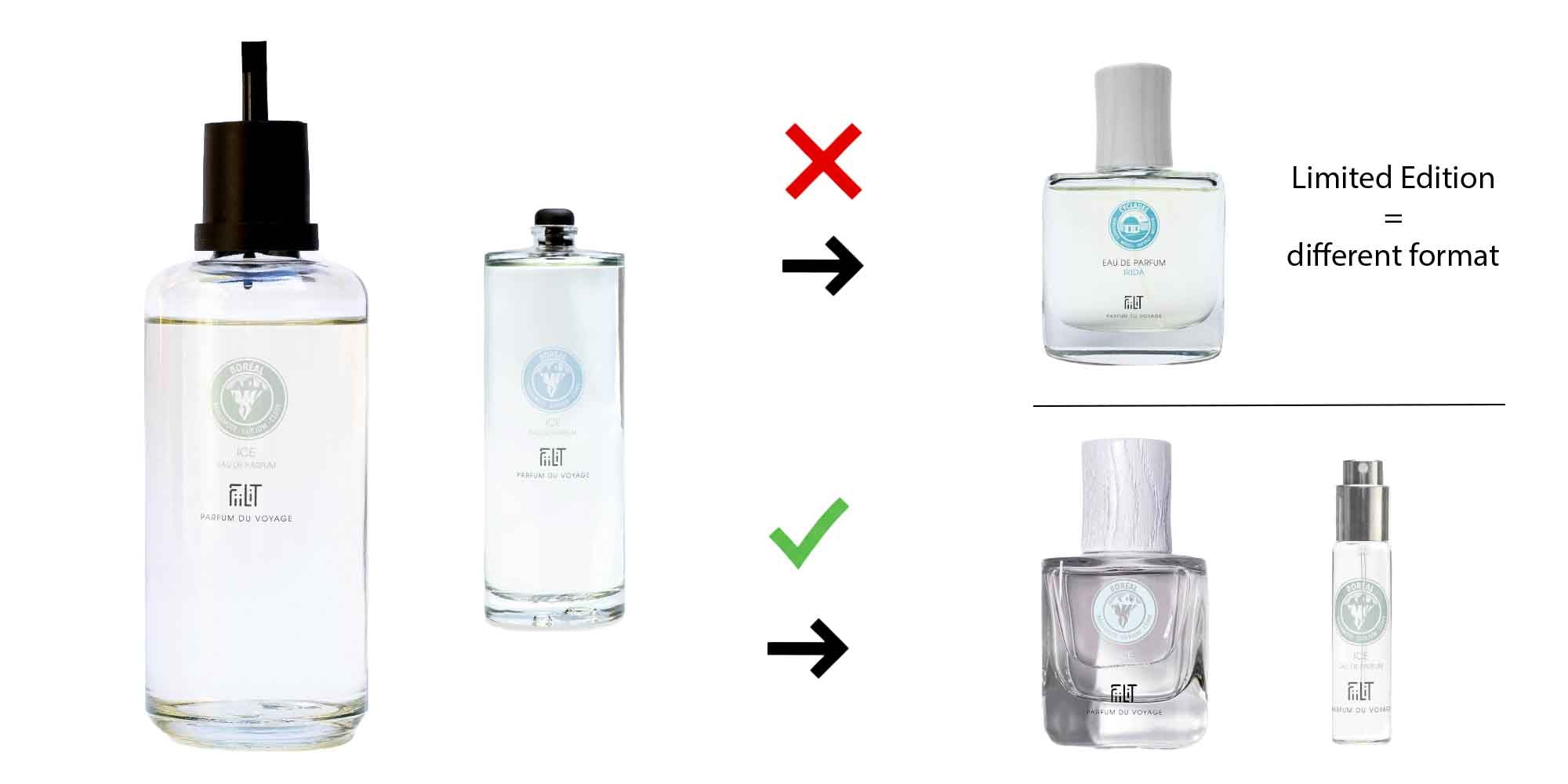
✅ La recharge est compatible avec :
❌ Non compatible avec :
C'EST VOTRE PREMIER ACHAT ?
Nous vous recommandons de commencer par un flacon de 50mL devissable (le premier format de ce parfum)
Floral épicé chypré
The Olfactory Pyramid in Motion
From the soaring top notes to the depth of the base notes
Fragrance Accords
Chacun son histoire : tester le petit conteur
Découvrez les récits fascinants derrière chaque fragrance (caution : peut se tromper)
Prolonger le voyage avec les recharges pour plus d'écologie, d'économie et de plaisir.
NOTE: Refills come without a sprayer and require a refillable 50 ml or 11 ml bottle.
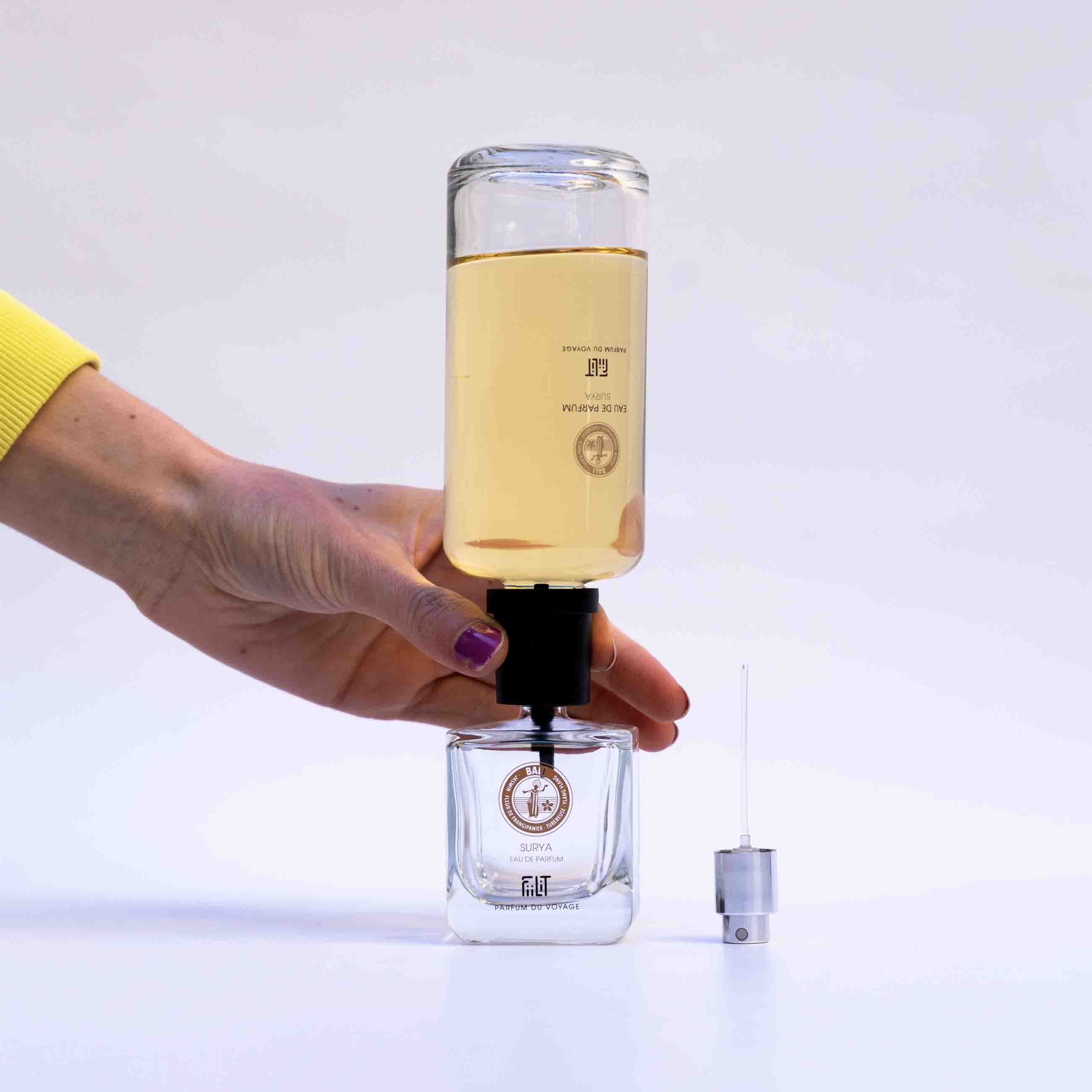
Recharge 200 mL – avec Embout Entonnoir Intégré
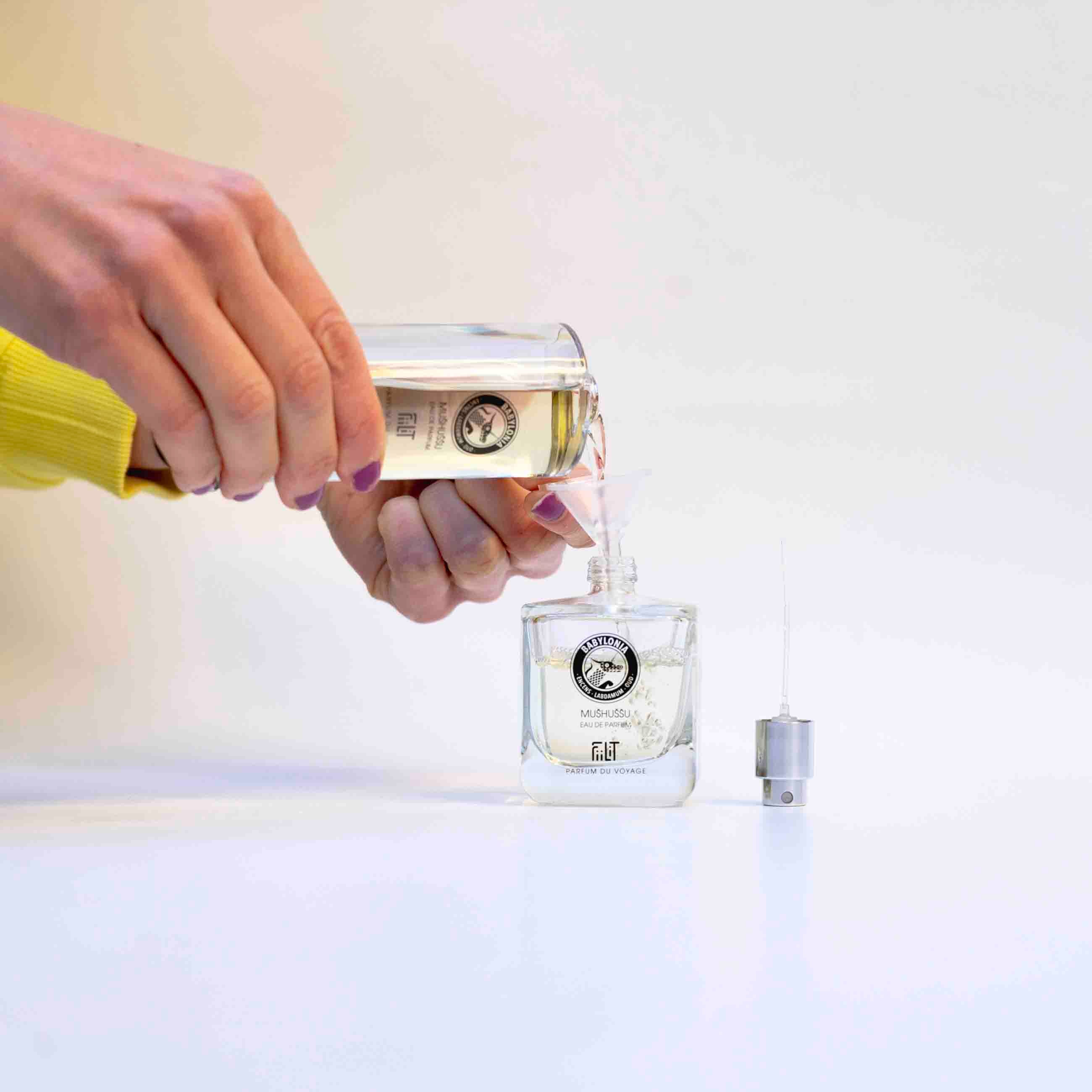
Recharge 100 mL – avec Entonnoir Fourni
Top notes: generally hesperidic (citrus) and aromatic families (e.g. orange, yuzu, eucalyptus). Their intensity is very high at 0 h and drops quickly after a few hours. This is the expected behaviour of these volatile notes, which define the first impression of the perfume.
Heart notes: generally floral, spicy or fruity families (e.g. fig leaf, cherry blossom, tuberose). Their intensity is moderate at first, peaks around 6 h, then gradually fades. They form the character and main theme of the perfume.
Base notes: generally woody, amber, leathery or chypre families (e.g. vetiver, vanilla, sandalwood, patchouli). They start with a low intensity that increases and stabilises to become dominant after 12 h and 24 h. They form the sillage and ensure the perfume's longevity.
Our perfumers pair the most volatile raw materials with base or structural notes to improve their natural longevity.
The notes of each Parfum du Voyage react differently on every skin, creating subtle or sometimes striking variations that reflect your individuality. When you wear one of our perfumes, you live a personal olfactory experience that no one else can copy.
Ingredients chosen one by one. Essential oils, absolutes, natural extracts: our perfumers in Grasse work with materials sourced at origin, from supply chains we know by name.
87% to 100% of natural origin. When a composition calls for it, a few high-quality synthetic molecules extend a note or sharpen its colour. They enhance nature, they never replace it.
A readable formula. The full ingredient list is on every product page: you know exactly what you wear.
One bottle for life. We are constantly working to reduce our impact: your 50 ml refills with our 100 ml and 200 ml refills. Keep the bottle, only buy the fragrance again.
La principale différence réside dans leur méthode de remplissage et leur facilité d'utilisation. Bien que les deux permettent de recharger vos flacons de 50mL et 11mL, leur conception est différente :
En résumé, les deux formats sont économiques et écologiques, mais la recharge de 200mL offre un confort d'utilisation supérieur grâce à son système de remplissage innovant.
To fill the 11 ml travel bottle or the 50 ml bottle with a 200 ml refill, follow these steps:
1. Unscrew the pump of the refillable 50 ml or 11 ml bottle, counter-clockwise (to the left).
2. Screw the "funnel" tip of the refill onto the bottle to refill, clockwise.
3. Once screwed on tightly, the bottle fills by itself thanks to the air intake. If it does not fill immediately, shake the refill gently to help the perfume flow down. Wait until the bottle is full. When there are no more bubbles in the refill, filling is complete.
4. Unscrew the refill by its tip, holding it firmly.
5. Screw the pump back onto your bottle. You are ready to wear it.
Note: when handling the refill, take care not to unscrew the "funnel" tip from its 200 ml bottle.
Store your refill away from light and heat to preserve the quality of your perfume.
200 ml refill, built-in RT Twist tip:
- Very easy to use, anti-overflow system.
- Refills 11 ml and 50 ml bottles.
- Ideal for clean, quick refills.
- Economical and responsible format.
100 ml refill, with funnel:
- Also fills 11 ml and 50 ml bottles.
- Trickier to handle: higher risk of spilling with the funnel.
- Best if you are comfortable decanting by hand.
- Economical and responsible format.
Refills reduce your environmental impact while offering a durable, economical solution. A responsible way to enjoy your favourite fragrance to the full.
How many refills can I make? 200 ml ≈ 4×50 ml or 18×11 ml; 100 ml ≈ 2×50 ml or 9×11 ml.
To fill the 11 ml travel bottle or the 50 ml bottle with a 200 ml refill, follow these steps:
1. Unscrew the pump of the refillable 50 ml or 11 ml bottle, counter-clockwise (to the left).
2. Screw the "funnel" tip of the refill onto the bottle to refill, clockwise.
3. Once screwed on tightly, the bottle fills by itself thanks to the air intake. If it does not fill immediately, shake the refill gently to help the perfume flow down. Wait until the bottle is full. When there are no more bubbles in the refill, filling is complete.
4. Unscrew the refill by its tip, holding it firmly.
5. Screw the pump back onto your bottle. You are ready to wear it.
Note: when handling the refill, take care not to unscrew the "funnel" tip from its 200 ml bottle.
Store your refill away from light and heat to preserve the quality of your perfume.
200 ml refill, built-in RT Twist tip:
- Very easy to use, anti-overflow system.
- Refills 11 ml and 50 ml bottles.
- Ideal for clean, quick refills.
- Economical and responsible format.
100 ml refill, with funnel:
- Also fills 11 ml and 50 ml bottles.
- Trickier to handle: higher risk of spilling with the funnel.
- Best if you are comfortable decanting by hand.
- Economical and responsible format.
Refills reduce your environmental impact while offering a durable, economical solution. A responsible way to enjoy your favourite fragrance to the full.
How many refills can I make? 200 ml ≈ 4×50 ml or 18×11 ml; 100 ml ≈ 2×50 ml or 9×11 ml.
All of them, except the limited-edition 50 ml and the 1.5 ml sizes.
We carefully pack your perfumes as quickly as possible after your order (usually one working day). Once your parcel has shipped, you will receive an email to track it. Delivery time depends on your location (about 3 working days for France, 4 to 5 days for neighbouring countries, one week to 10 days for the rest of the EU and about 2 to 3 weeks for international destinations such as the US, Canada or South Korea).
Important note
We are a niche perfume house that cares deeply about the quality and originality of our creations. We believe perfumes are personal and unique expressions that can evoke intense, captivating emotions. This uniqueness can also mean that our fragrances do not suit every taste. We therefore recommend trying our products before buying, to find the perfumes that best match your personality and olfactory preferences. To discover them on your skin, try our Discovery Set.
Buyer protection
You have 14 days from receipt to return a product in its complete original packaging. You may open it to look at it, but not use it: if the contents have been used, taken out or refilled, the depreciation is deducted from the refund. Return costs are at your expense (tracked registered shipping, or a return label paid through a payment link we send you) and we refund you on receipt, including the initial delivery costs. Damaged or wrong product: send us a photo, and the return costs are then at our expense. Unsure? Add the 1.5 ml mini format to try it before using a full bottle. Learn more
All our eaux de parfum are unisex, 87% to 100% of natural origin.
Refillable bottles : 50 ml / 11 ml with wooden travel case / 11 ml on its own
The wooden travel case comes with its 11 ml fragrance.
Non-refillable bottles : limited-edition 50 ml and 100 ml
Made in : France
Vegan fragrance : yes, brand listed by PETA
Long-lasting on skin : yes
Readable formula : full ingredient list (INCI) on every product page
Composition : alcohol, essential oils, absolutes and natural extracts, completed in some fragrances by a few carefully chosen synthetic molecules
Concentration : eau de parfum
Age group : adult
Gender : unisex (for men and women)
Packaging : reusable and recyclable glass bottle, non-recyclable spray pump, ash-wood cap from France, Spain and Belgium, PEFC certified. The 11 ml bottle always comes inside the wooden travel case.

